

The Twilight Saga – Book Review
I finally understand why people are so obsessed with The Twilight Saga. I certainly feel guilty to admit that…. I found Twilight…
This is what reading Twilight is like for someone who didn’t grow up reading the series.
Background
When Twilight released in 2005, I was 2 years old. When first movie came out in 2008, I wasn’t even in kindergarten yet. I know, I know. I’m making some of you feel very old.
I point out my age to illustrate the chokehold The Twilight Saga has over bookish spaces. For better or worse, the series is as a modern classic. At least in terms of popular culture.
I first became acquainted with the franchise during the Breaking Dawn Part 1 hype. My friends got me to watch the first movie and I was hooked… perpetually rewatching the first movie because I didn’t have access to the others.
I quite enjoyed it for a few years, but never watched past the first movie. But by middle school, I thought it was the worst thing ever made–as many middle schoolers do to things they once enjoyed–and I’ve avoided it since.
At 22, it’s finally time for me to read The Twilight Saga.
Twilight
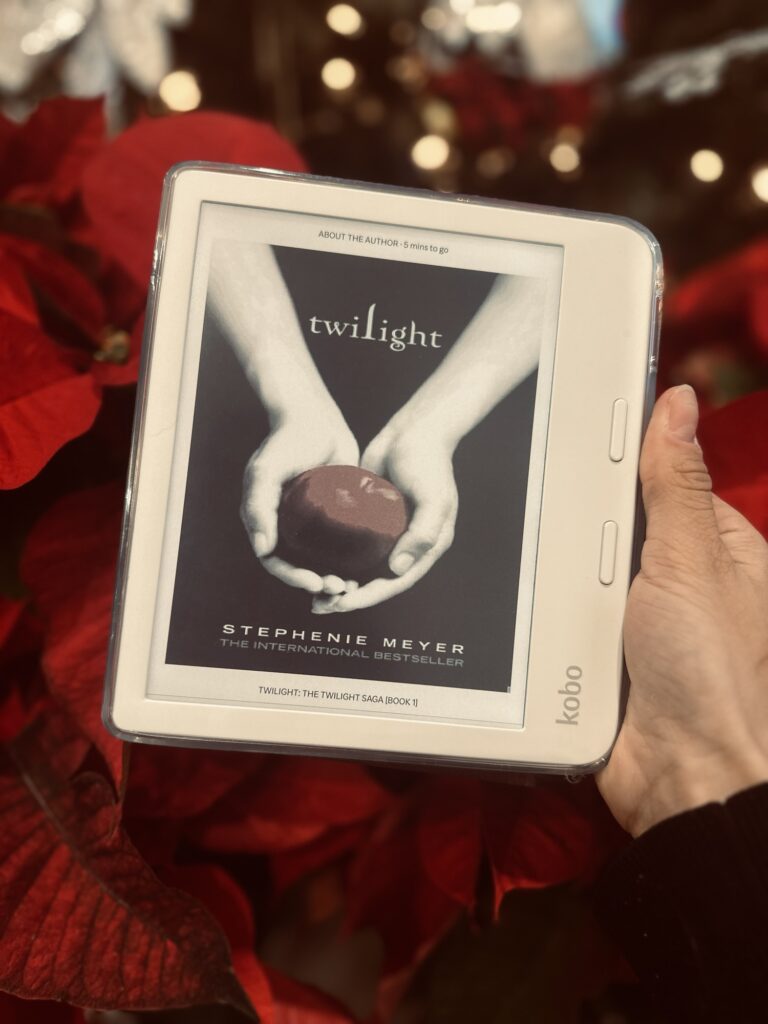
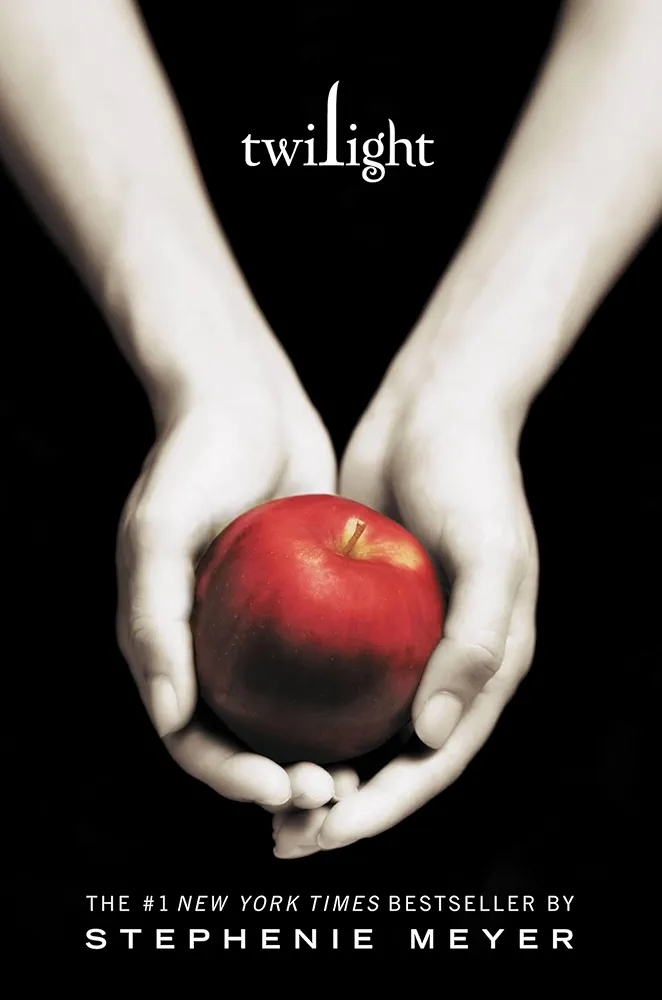
Twilight’s epigraph is Genesis 2:17 which positions Bella as the apple, or akin to an object of temptation. We’re already off to a great start…
But of the tree of the knowledge of good and evil, thou shalt not eat of it: for in the day that thou eatest thereof thou shall surely die
Genesis 2:17
I cannot say I’m a fan of framing women as objects of temptation against a man’s pure intentions. Though with the gaslighting, I’m not sure I can call Edward’s intentions pure. Nevertheless, where Twilight attempts to divert from this traditional narrative is that Edward is dead set on saving Bella’s “soul,” and she is determined to lose it asap.
Vampirism is sometimes read as allegorical to sex. Edward is under the impression that vampirism doomed his soul, and he wants Bella to wait until after marriage to be turned. Therefore, premarital sex sends you to hell… according to Twilight. I personally disagree with this worldview, so I found most of the conversations surrounding Bella’s humanity to be icky at best. Though, to be fair the book consistently stayed to its themes.
I can see how a 15 year old girl reading the novel could relate to Bella’s teen angst. I may not have been that girl—I was obsessed with ACOTAR at 15, so my tastes were on the other end of the spectrum—but she is out there.
Let me know if you want me to do a 7 year retrospective of ACOTAR after first reading it in 2018!
To anyone who says Bella doesn’t have a personality, I disagree…. She does have a personality, and it is insufferable. She moves to a new school, makes friends on day one and is immediately picked up by the most popular guy. Yet, she has the audacity to act like everyone thinks she’s uncool. Girl, please.
The Cullens are undoubtedly the best part of this book, even if they often come across a bit cult-y. Alice and Carlisle are highlights of the entire series. Alice’s unwavering friendship to Bella is heartwarming, especially when many of the male characters seem to want to manipulate her.
It’s amazing the things you start to pick up on when your brain is at least somewhat fully developed, because Edward’s gaslighting and manipulation went completely over my head while watching Twilight as a child. As a person with about 88% of a fully developed brain—two more years to go, woohoo!—I am happy to announce I see the toxicity now.
The scene which best exemplifies the manipulation is when Edward gaslights Bella to believe he was standing right next to her before the car crash.
The following is all from Chapter 3, Phenomenon:
Edward Cullen was standing four cars down from me, staring at me.
Bella very clearly sees Edward. But later in the hospital…
“I was standing right next to you, Bella,” he said, his tone serious again.
and when Bella insists she’s not crazy…
”Bella, I was standing with you, and I pulled you out of the way.”
”Trust me,” he pleaded,
My jaw was on the floor when I read Chapter 3. He took advantage of her within a vulnerable state of memory and treats her like an asshole!
Yeah yeah, its apart of his “plan” to push her away. But, I call bullshit.
I know Team Edward is going to come out of the woods and burn me at the stake for my opinions…. but, just because Edward is “protecting” his identity as a vampire does not give him an excuse to gaslight. Edwards “protectiveness” of Bella in general does not give him, or anyone for that matter, an excuse to be controlling. If anyone tries to tell you where you can go, who you can see, what important information you’re privy to… run for the hills.
I think a popular argument for Edward’s behavior in this scene has a basis in the tropes Twilight uses to convey its romance, that being enemies to lovers….. Which is an argument that would hold water if Edward changed his manipulative personality by the end of the series. And he doesn’t: the manipulation gets worse.
I certainly feel guilty to admit that…. I found Twilight…. entertaining. Is it a thought provoking, expertly crafted fantasy novel with immaculate prose? No, and its laughable to assume it would be. But it is a wild ride of terrible tropes, hilariously bad moments, and characters that are fun to hate.
As a conclusion to my Twilight review, I hereby join Team Alice.
New Moon
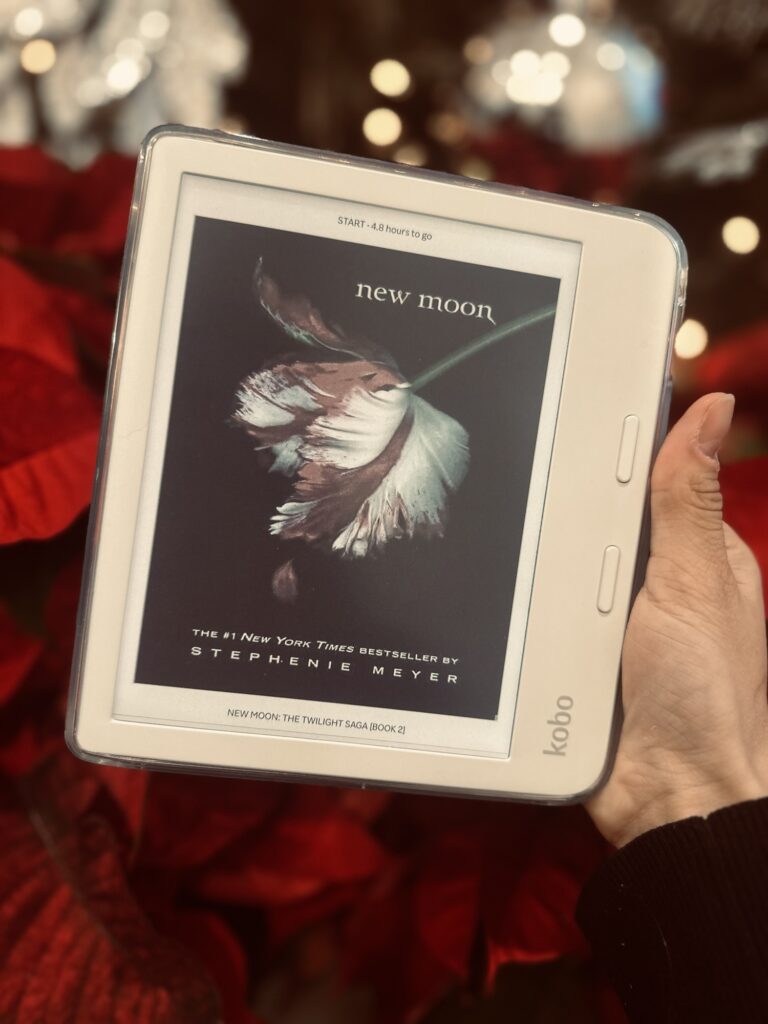
The epigraph of New Moon is from Romeo and Juliet which foreshadows Edward’s suicide plot at the end of the novel.
These violent delights have violent ends
And in their triumph die, like fire and powder
Which, as they kiss, consume.Romeo and Juliet, Act II, Scene VI
Something I do really like about The Twilight Saga is that the romance is written for its intended YA audience. Far too often are books published as YA, yet they should be categorized as adult romance or even erotica.
I think that framing New Moon as a Romeo and Juliet retelling is a perfect way to teach young audiences about an iconic Shakespeare play. The same goes for the blatant references to Emily Brontë’s Wuthering Heights in Eclipse.
I’m also a sucker—ha! Vampire pun—for references to Early Modern poetry and Victorian gothic novels, so I’m quite biased.
Starting New Moon, I was initially excited to see how Jacob would be portrayed. New Moon is Jacob’s novel, whereas Twilight is Edward’s novel. Meyer uses Wuthering Heights parallels by sending Edward away from the plot like Heathcliff, allowing Edgar Jacob to slide into Bella’s life once more.
I was aware about… the incident… in Breaking Dawn, since I don’t live under a rock. But, other than that, I was entirely unaware of Jacob’s character arc.
So boy was I disappointed when Jacob started pestering Bella into going out with him. I half expected him to buy a fedora and start calling Bella m’lady. What makes the situation even worse is that Bella enters the pseudo-relationship with Jacob with the understanding that she is toying with his feelings.
Bella is literally doing what the ‘incels’ claim all women do.
Bella gets learns how to manipulate emotions from Edward and then turns around and does it to Jacob.
I may believe that these novels are good examples of the right “spice” level for YA, but I wholeheartedly disagree that the series provides good character examples for teens. Many characters readers are supposed to like are just plain rude, manipulative, or pushy.
Bella gets away with some bad behavior herself, too.
In New Moon, Bella enters a state of depression and stops hanging out with her friends. On the surface, this is realistic and likely relatable for many teen readers. It definitely is for me in my 20s. However, the narrative fails, in my opinion, to properly comment on Bella’s responsibility within the whole ordeal.
From the perspective of her friends, Bella abandoned them to date the popular guy. When Edward “dumped” her, she was left alone because she made her entire personality insperable from a man. Then she comes crawling back to them, and understandably, they don’t want a lot to do with the girl who set them aside like scraps.
Annnd what does Bella do about it? She attaches herself to another man to distract herself from the first.
I’m not saying these ideas can’t be relatable or be a good plot point. What I’m saying is that there needs to be sufficient commentary within a Young Adult novel regarding such topics if they’re going to be included. YA should serve the interest of instilling morality within a young audience. Is this the morality we want to be giving 15 year olds? But what do I know, I was the one reading ACOTAR at 15….
Eclipse
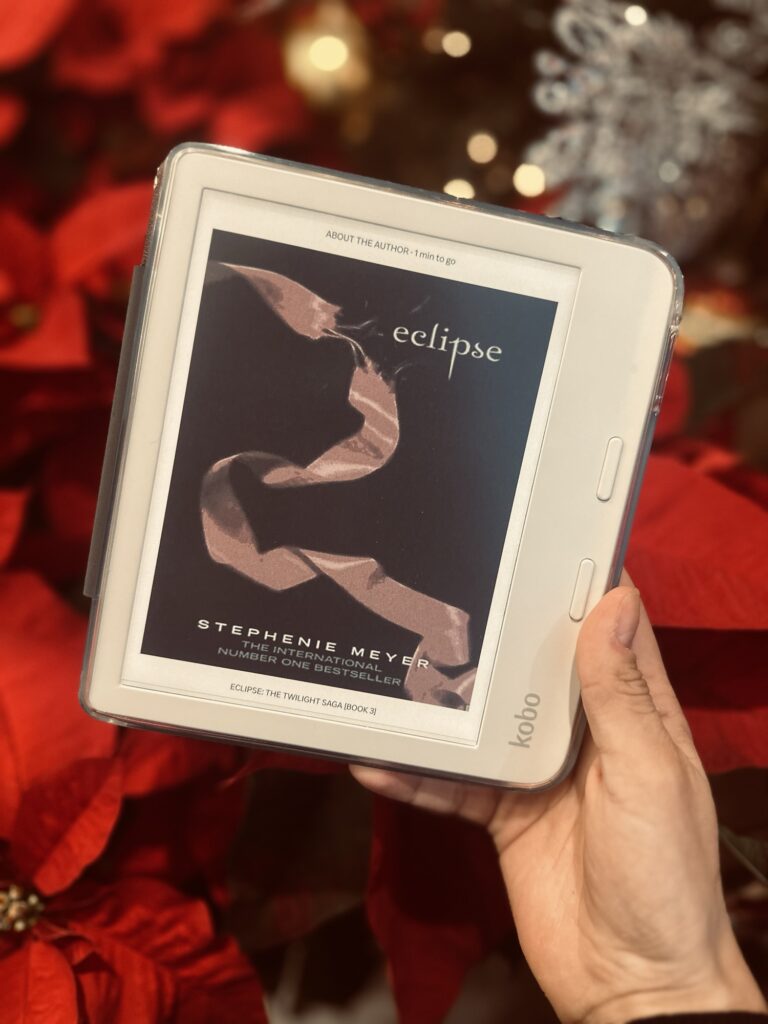
Eclipse‘s epigraph is the Robert Frost poem, Fire and Ice.
Some say the world will end in fire,
Some say in ice.
From what I’ve tasted of desire
I hold with those who favor fire.
But if it had to perish twice,
I think I know enough of hate
To say that for destruction ice
Is also great
And would suffice.Robert Frost
The poem exemplifies the apocalyptic level threat of…. a high school senior choosing between two boys. Jokes aside, the poem does attempt to showcase the finality of the decisions made within the novel. This is where Bella makes her deciding choice.
My interpretation is that Edward is exemplified as fire in the poem due to vampirism’s connection to fire and brimstone. Turing into a vampire is said to be a burning sensation, and Edward says it damns his soul to hell. It’s as if the poem is saying that Bella would chose Jacob in another life, but that isn’t this life.
Chapter 22, titled Fire and Ice, makes Jacob the fire. Bella uses him as a space heater during the cold night in the tent. So my interpretation was not where the book seemed to go with it.
Speaking of Jacob… Meyer introduces the concept of imprinting on toddlers in this book, foreshadowing the disturbing plotline between Jacob and Renesmee. Quil imprints on Emily’s younger cousin, Claire, who is 2 years old.
Quil acts like Clarie’s big brother, taking care of her. Yet, he also is against the idea of dating because she’ll be waiting for him. As if what he’s doing isn’t grooming to the highest degree. That gets touched on a little bit more in Breaking Dawn… through Jacob’s chapters.
Mentions to the apocalypse in the epigraph could refer to the vampire army gearing up in the background of the book. Like all these books, the pacing is breakneck at the end when the plot demands it.
Victoria is making a newborn army to take out Bella and the Cullens. In response, the vampires and werewolves of Forks team up to protect Bella. It’s all very dramatic and Helena of Troy-esque.
I found the final scene where Edward has to kill Victoria to be unintentionally funny. Bella watches the entire thing unfold while screaming. I’m sure most of us would react similarly…. Though, from the perspective of a main lead of a novel, it is a little annoying since I like when main characters have more impact on the story than its readers.
Something I did enjoy reading about during that scene was the manner in which Edward killed Victoria: dismembering her. He really made that as gruesome as possible. These books don’t have a lot of violence, so when there violence, it sticks out.
I was already really burned out on this series by the time I’d got to Eclipse. Due to the consistent pacing issues intertwined with Bella’s lack of agency and toddler imprinting, I was at my limit with The Twilight Saga.
Breaking Dawn
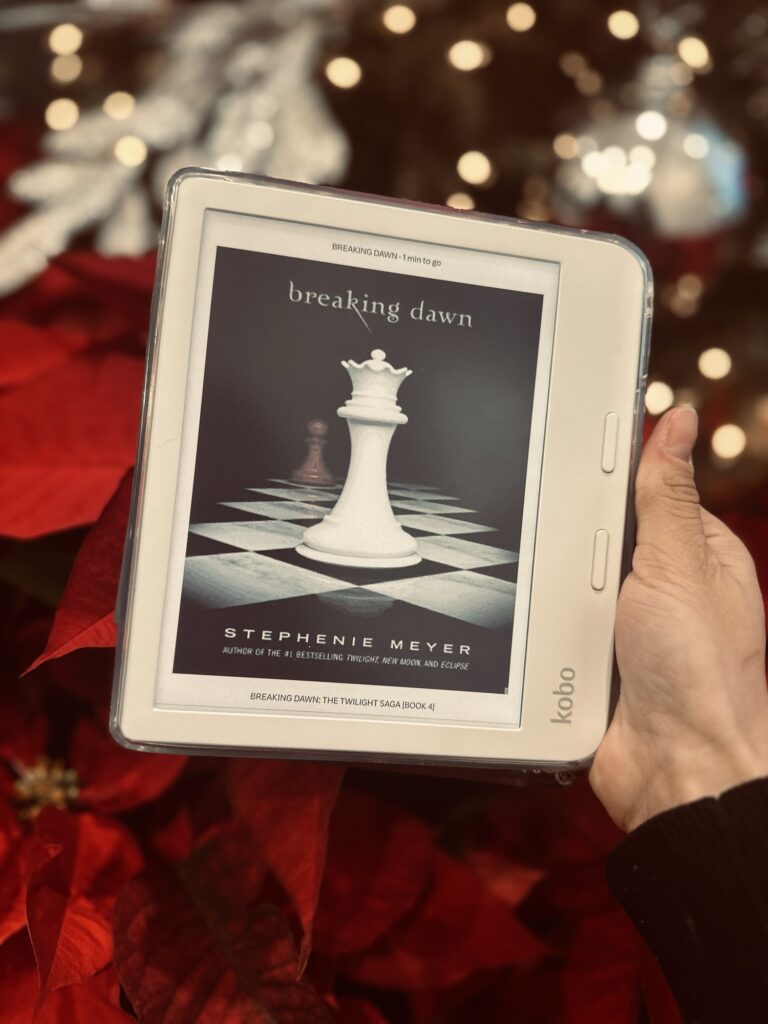
I truly cannot reconcile the trajectory of Bella’s life in my head. She marries her high school sweetheart, only to turn down an acceptance to an Ivy League university because she had a baby. I knew Renesmee existed… but I could never have been prepared for the way their story unfolded.
First off….How the hell does Bella get pregnant? Edward doesn’t have blood.
To my surprise, Meyer lays it all out to us on her website’s FAQ. The answer is venom. After reading that paragraph about vampire biology, I am confused, disturbed, and impressed all at once.
Since I perpetually rewatched the first movie growing up, I had always assumed that Breaking Dawn took place in the future or that it had a time jump allowing Renesmee to be older. NOPE. Bella turns 19 right before giving birth.
Second…Renesmee’s accelerated biological clock brings up some fascinating discussions about what it means to be an adult. I do not feel comfortable saying that Renesmee will be an adult at 7. Sure, she’ll look like she’s 18… but she certainly won’t have the life experiences of an 18 year old.
Renesmee’s accelerated aging feels like a way for Meyer to avoid halting the narrative’s pacing. Who wants to read about infant care in a teen romance, anyways? However, I find this all terribly ironic because the narrative is halted by pregnancy anyways. Bella isn’t even in half the book!
Breaking Dawn is told from Jacob’s perspective while Bella is pregnant. Now, I did enjoy his segment more than I thought I would–it is pretty cool to see how Edward’s mindreading powers work–but Jacob’s entire entire segment was very frustrating to read at first.
Now, back to Renesmee. I feel like her existence within the narrative is to do three main things: to create contrived conflict, to provide Jacob an imprinting partner, and to satisfy patriarchal themes.
- The Volturi wanted Bella to become a vampire. Once she did, there was no reason for the plot to continue. Renesmee gives the Volturi a reason to come back and bother the Cullens.
- Maybe I missed something, but I fail to understand why they couldn’t just go after the Cullens because they can. The answer can always just be house politics; that’s what Romeo and Juliet and Wuthering Heights are.
- Jacob needs to imprint on someone because it has been foreshadowed for at about two books. It must happen for the plot to be satisfying. But, does it need to be Renesmee?
- The imprinting solves the wolfpack versus coven fight. Since Renesmee imprinted with Jacob, she can’t be killed by Sam’s pack. Imprinting on Renesmee gives Jacob a reason to have gone after Bella so persistently and for the wolfpack conflict to resolve.
- Renesmee’s inclusion satisfies patriarchal themes by reinforcing traditional gender roles. For Bella to become the greatest version of herself, in this case a vampire, she has to become a mother. Not to mention, without Renesmee the argument becomes: for Bella to become the greatest version of herself, she must marry. Which is still enforcing traditional gender roles!
- A child resulting from a romance plot with no sex until marriage is the ultimate form of patriarchal symbolism. Thank you for coming to my TED talk.
Renesmee is undoubtedly important to the plot of Breaking Dawn and to the themes of The Twilight Saga as a whole…. But I wish her existence didn’t stand as a testament to everything I despise about this series. Meyer very carefully planned out her books, that much is evident, but it culminates into framing patriarchal themes in a manner I simply do not agree with.
Series Conclusions
I finally understand why people are so obsessed with The Twilight Saga. Though, while I understand it, that doesn’t mean I have bought a ticket aboard the hype train.
After reading the books, I have developed a greater respect and appreciation for Stephanie Meyer, and even more for the series I once called “the worst thing ever made.”
I still don’t like them by any means, but calling them the worst is unfounded. It is clear to me that Meyer put a great deal of care into crafting the themes and symbolism of The Twilight Saga, they just don’t compute for me.
Eclipse certainly has the most going for it, as it is the book which “solves” the whole Edward v Jacob debate, but I believe that Twilight is the best book of the series. Every single one of the books has pacing issues, but Twilight excels above the rest because it isn’t bogged down by any previous novels and plot threads. It’s simply a vampire romance, no more no less.
Overall, I think the entire saga can be rated at 2 Stars. The pacing issues, poor characters, and patriarchal ideals bring it down. I would rate it lower…. but I think the literary parallels, consistent themes, and entertainment value are acceptable enough that it isn’t a 1 Star read.