

Why The StoryGraph is the Best Goodreads Alternative
The StoryGraph is the best tracking app a reader can ask for….
The StoryGraph is the best tracking app a reader can ask for. If you are searching for recommendations, community, or simply logging your reading, The StoryGraph sets a new standard for its competition. It is a user-friendly, independent alternative to the Amazon owned Goodreads. Here you will learn more about the creation of the StoryGraph, its current and upcoming features, and why it is the best platform on the market.
Table of Contents:
- What is The StoryGraph?
- Graphing and Tracking Overview
- Recommendations Overview
- Plus Plan Overview
- The Future of The StoryGraph
- Conclusions
What is The StoryGraph?
The StoryGraph is an up-and-coming name in the world of book tracking applications that entered the scene in 2019. It is accessible online and available as an app for both Android and iOS. The StoryGraph allows users to track, analyze, and find book recommendations. It is that simple.
The StoryGraph began as a side project by software developer and avid reader, Nadia Odunayo. Development of the platform started small and users were able to create custom book lists. After demo feedback rolled in, development of the application expanded to encompass features the book tracking market was sorely lacking: tailored recommendations and graphing features.
In an interview with The Quill to Live, founder and CEO Odunayo described the platform as “a website that helps you find perfect books for you based on your mood and the types of books you like to read.”
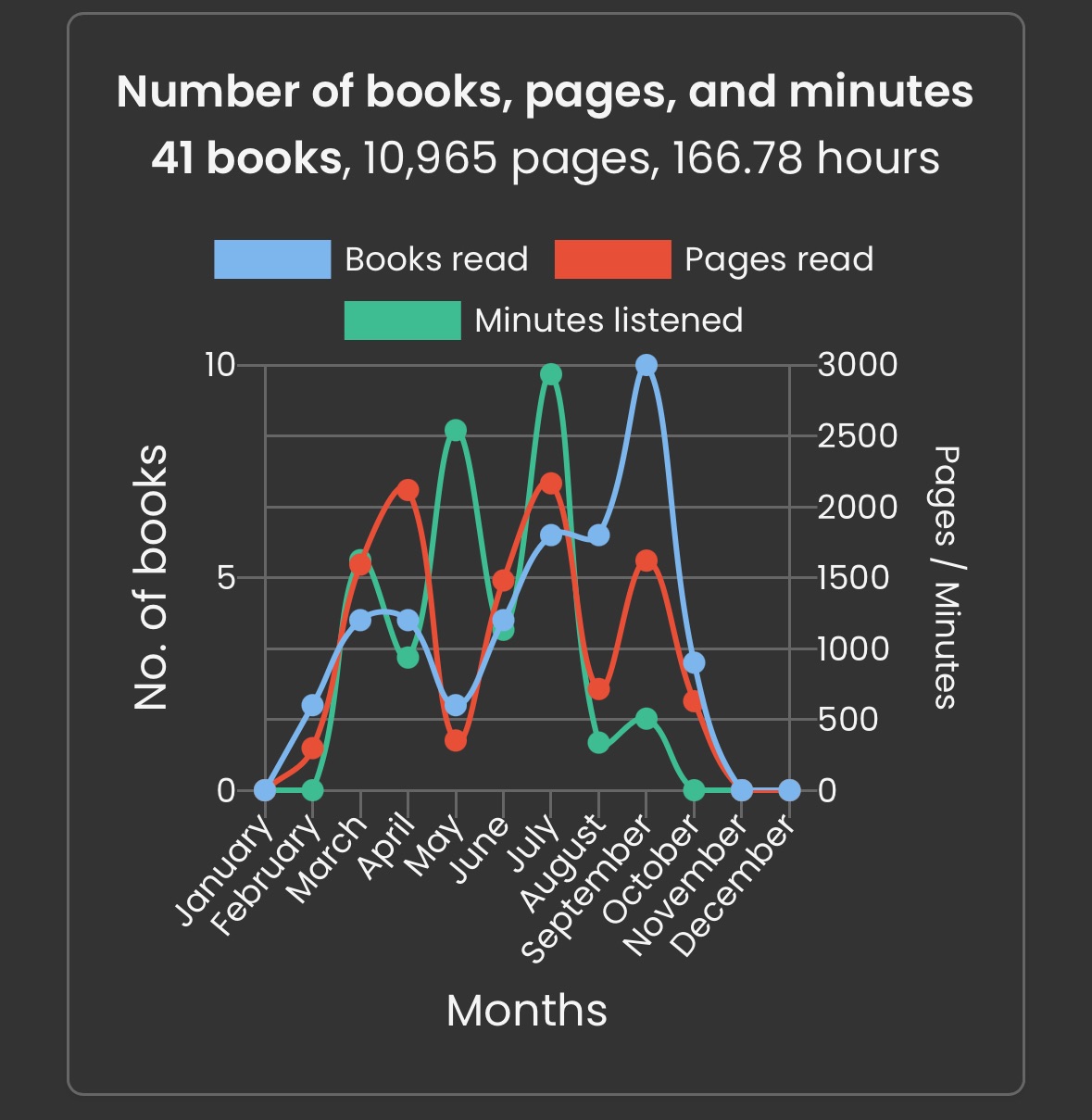
As its name suggests, The StoryGraph is best known for its intuitive charts which visualize your reading data according to a number of selectable variables. Such as author, genre, format, mood, length, pace, and more! Analyzing your habits and achieving your reading goals has never been easier than with The StoryGraph.
The StoryGraph positions itself as an independent alternative to Goodreads, which was acquired by Amazon in 2013. In comparison, The StoryGraph is currently run by three book lovers: Founder & CEO, Nadia Odunayo; Co-Founder & Chief Ai Officer, Rob Frelow; and Admin, Support, and Product manager, Abbie Walker.
The application matches Goodreads in functionality and packages everything with a less confusing, cleaner design. Users can record their reading status, create lists and graphs, assign ratings, log metadata, and participate in reading challenges. The combination of design, functionality, and accessibility is what makes The StoryGraph a contender against industry giant Goodreads.
Graphing and Tracking Overview
The hallmark feature of The StoryGraph are the unparalleled tracking tools. No other program comes close to matching them in functionality or design.
”I think people love the different types of data we give,” said Odunayo to The Guardian back in Feb. The titular graphs draw users to the platform because it sets The StoryGraph apart from their competition in a way that is meaningful to the user experience.
The view of the stat charts can be fine tuned to a specific date and filtered by the corresponding lists. Each list has its own sub data under the contents section.
- Read Books
- Book count, page count, listening hours, average time to finish
- To-Read Pile
- Book count
- DNF Books
- Average progress through a book before DNFing
- Average time with a book before DNFing
- Number of pages read out of total before DNFing
- Hours listened out of total before DNFing
- Owned Books
- Book count, page count, listening hours, average time to finish
The contents of the stats page are easily readable with a drop down menu to help you navigate quickly. The StoryGraph’s accessible UI is in stark contrast to Goodreads’, which was only improved upon last July, finally making the leap from looking like a MySpace page to a tech savvy teen’s Tumblr blog.
With the free plan, users can sort by:
- Moods
- Ex: adventurous, challenging, dark, emotional, funny, hopeful, informative, inspiring, lighthearted, mysterious, relaxing, and tense.
- Pace
- Fast, medium, or slow.
- Fiction vs Nonfiction
- Genre
- Format
- Audio, digital, or print.
- Author
- Language
- Page Number
- <300, 300-499, and 500+
- Audiobook length
- <8.00, 8.00-15.59, and 16.00+
- Star Rating
- Quarter star increments
- Publication Year vs. Read Date
Recommendations Overview
The StoryGraph has a robust AI that tailors book recommendations to each user like a trusted friend. They implement machine learning in a way that makes it easier than ever to find books you will want to read.
”When I thought about building the ultimate reading tracking app, one of my dream features was the ability to help make the decision of what to read next a lot easier,” Odunayo said in an interview with University College Oxford. Her dream became reality through The StoryGraph’s AI because it learns your reading preferences and generates recommendations with the press of a button.
Recommendations are based on:
- Your reading history (books you have read, rated, tagged, etc).
- Your stated reading preferences (via surveys of genre, mood, themes, etc).
- Your meta data preferences (mood, pace, format, etc).
The StoryGraph starts trying to find books for you from the moment you create your account. When you onboard, you take a survey of your preferences in categories such as genre, mood, and pace. Your survey data is collected by the AI and a book list is generated from the results. From there, the platform sections off recommendations into lists, such as: based on recent reads, your selected genre preferences, similar users loved, or books that could be out of your comfort zone.
Recommendations become more accurate as you read more. So get tracking!
Plus Plan Overview
The StoryGraph operates on a freemium model, meaning the vast majority of features are available to all users with select features blocked behind a paywall. As of the publication of this article, The StoryGraph Plus is $4.99 per month.
Plus members get exclusivity to:
- Investing in a Goodreads alternative not owned by Amazon
- Paying for the premium subscription keeps The StoryGraph independent, ad free, and constantly evolving to fit users needs.
- Custom charts
- Plus members can create their own pie and bar charts, customize labels, tags, moods, and more.
- Extra stats filters
- Stats can be filtered down to custom time periods, fiction or nonfiction, mood, genre, and more.
- multiple stat comparisons
- Members can compare any two stats segments of their StoryGraph library such as year to year or owned versus read books.
- Exclusive charts
- Plus members get access to exclusive charts in the year, number of books read, and genre category (Free users get access to the base charts).
- Involvement in the roadmap
- Plus members can vote on upcoming features (more on that below)
- Priority support
- Any support or request tickets given to the team by a Plus member are handled first.
Pros and Cons of The StoryGraph vs Goodreads
The StoryGraph’s marketing is not shy about positioning itself against industry giant, Goodreads. As such, it is only natural to compare the two.
Pros
- Quarter star rating increments. You can get very specific about your ratings whereas Goodreads only allows whole star increments.
- Versatile analytics and visualizations of user reading data. While Goodreads does display data graphs, they are blocked behind a clunky user interface and are limited in scope.
- Built in DNF and owned shelves. Goodreads forces you to create custom shelves.
- Content warnings. Goodreads does not have any.
- A reading journal to record your private notes. Goodreads does not have any such feature.
- Users can create an Up Next queue for their next five reads.
Cons
- Smaller userbase. Goodreads has a community of 150 million users.
- Less robust community features. Goodreads has more user created communities and an in-depth commenting system.
- Freemium model. Goodreads is completely free and does not block any features behind a paywall.
- Limited book catalogue. Goodreads has a larger database of books, publishers, images etc.
The Future of The StoryGraph
The future of The StoryGraph is looking quite bright with open and honest communication about upcoming features. You can find The StoryGraph’s roadmap here!
Community engagement is supported through allowing users who have purchased a Plus membership to submit idea requests to the team. Plus members are given the opportunity to vote on features they would most like to see.
As of the publication of this article, The StoryGraph team is working on adding Design, User Interface, and User Experience improvements, easier ways to edit tags, ordered lists, and the fourth iteration of their stats displays. Some exciting long term goals include dark mode wrap-ups, author stats, and their own API.
But what is an API? CEO Nadia Odunayo described it best in 2021, calling it “an Application Programming Interface (API) for people/developers to hook StoryGraph data into their own websites or build their own apps on top of our platform.” Creation of a StoryGraph API would solidify the app as the ultimate competitor to Goodreads, which stopped issuing developer keys for their API in Dec. of 2020.
User adoption is growing rapidly, with 3.8 million active users as of the beginning of 2025, and more people are signing up every day. The platform’s growth has been largely organic, mostly by word of mouth in online book communities and reinforced by user trust. It is quite remarkable how little time it has taken for The StoryGraph to build such a dedicated userbase.
Conclusions
Armed with data, design, and dedication, The StoryGraph is the best tracking companion a reader can ask for. What began as a small side project of a passionate reader has grown to tackle Goodreads by redefining what a reading tracker should be. The StoryGraph team continues to prioritize user experience, community support, and meaningful connections with books, making the platform an innovative space where technology enhances literary engagement. Whether you’re a casual reader or a meticulous tracker, The StoryGraph offers an experience built by readers, for readers, and it’s only improving from here.
Image Credit: Kaitlyn Parker


I really enjoyed your article. I particularly appreciate the degree of clarity it maintains while still being thorough.
Thank you so much for reading our article, Adam! I am happy to hear the balance of clarity and information worked for you!