

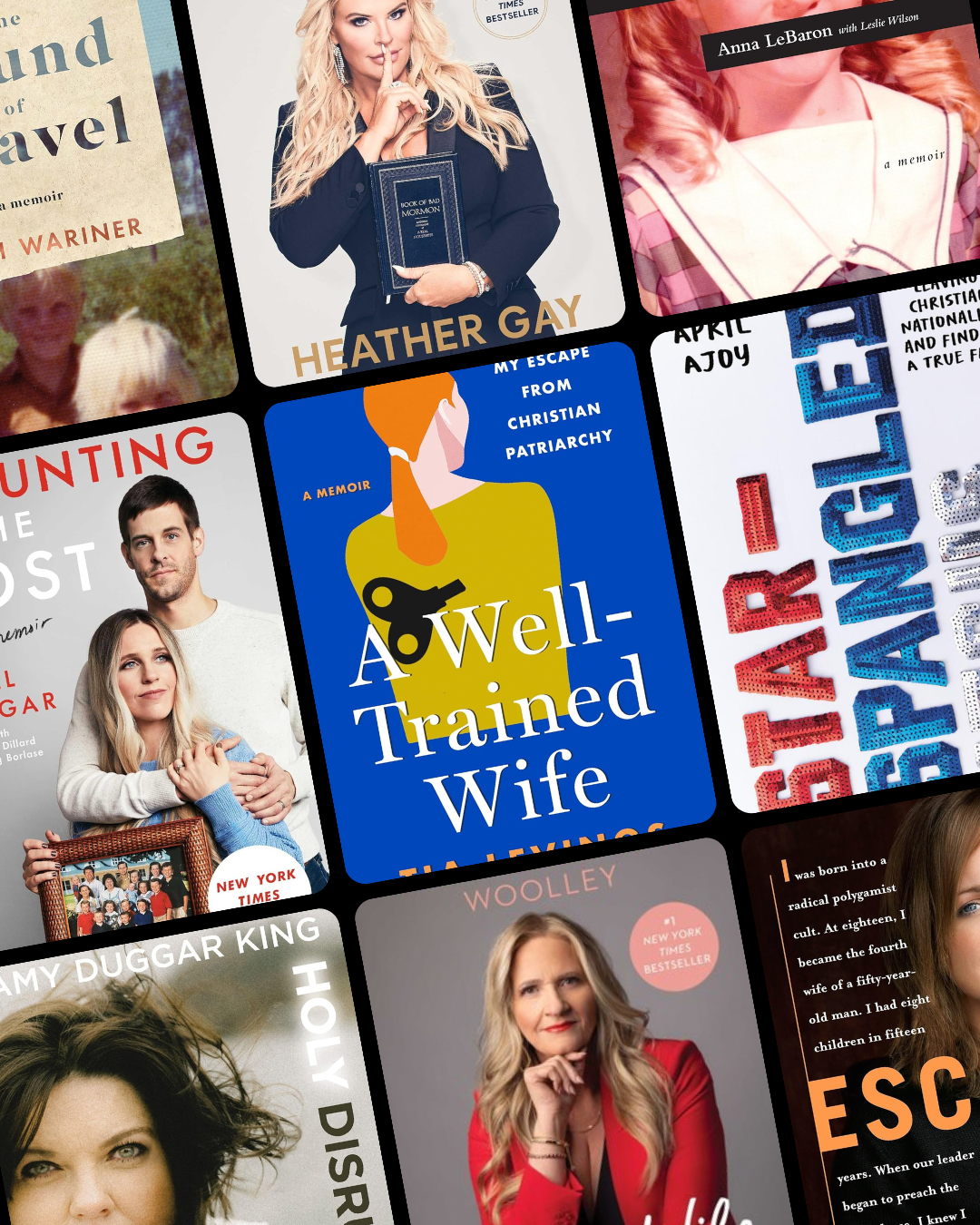
10 Cult Memoirs I Read Last Month
Last month I went down a reading rabbit hole of memoirs from people who grew up in or left high-control religious groups. When a belief system controls every facet of your life, walking away is one of hardest things a person can do.
Over the last month, I read 10 accounts of survivorship from cults, high control groups, and religious organizations.
While cults can be determined by utilizing tools like the BITE Model, for the sake of this article I will define a cult as any group the author, writing about their own experience, identifies as a cult.
Any of these books could act as an entry point to learn from the perspective of former members. I’d never heard of some of the organizations prior to reading; each provides enough information for the uninitiated to understand.
If you’re looking for captivating memoirs that leave you heartbroken and speechless, or maybe you want to learn more about some of these organizations, look no further than these 10.
All these books come with the following content warnings in some capacity: death; religious trauma; cults and high control groups; misogyny; racism; gaslighting; sexual assault, abuse, and rape; childhood neglect, abuse, and trauma; drugs and alcohol abuse.
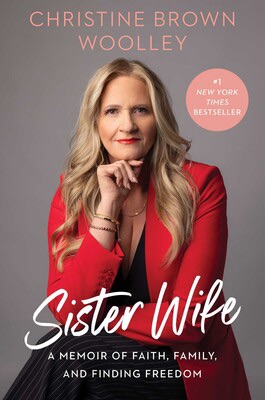
Sister Wife by Christine Brown Woolley
Group: Apostolic United Brethren
Sister Wife is a candid look behind-the-scenes of TLC’s polygamist reality show, Sister Wives, from the perspective of the 3rd wife, Christine Brown Woolley.
Sister Wife takes readers along a journey through Woolley’s upbringing in a polygamist household, her marriage to Kody Brown, and the start of her unconventional reality TV stardom. The memoir does a great job at pulling the cameras back and allowing readers to digest the emotional toll the celestial and contractual marriages to Kody and TLC had on her well being.
I knew absolutely nothing about the show or the Apostolic United Brethren (AUB) before reading the memoir. I found the memoir very compelling and then dove headfirst into the rabbit hole of information regarding the Brown family and the history of the show.
There is a lack of depth discussing the theological framework the AUB uses, that simply isn’t the focus of the book, and that’s okay. The book gives you the bare minimum of information you need to understand her religious positioning: the AUB is a fundamentalist offshoot of the Church of Jesus Christ of Latter-Day Saints, and should not be confused with the FLDS and Warren Jeffs. More on them later.
Sister Wife is primarily concerned with Woolley’s experience deconstructing polygamy, traditional gender roles, and ultraconservative Christianity all within the framework of a reality television show. In that, it excels, giving the reader a nuanced take on polygamy and religion.
Read Sister Wife if you’re looking for a drama-filled, emotional recap of a beloved reality TV show with a lot of culty undertones.
Additional content warnings for childhood terminal illness and pregnancy trauma.
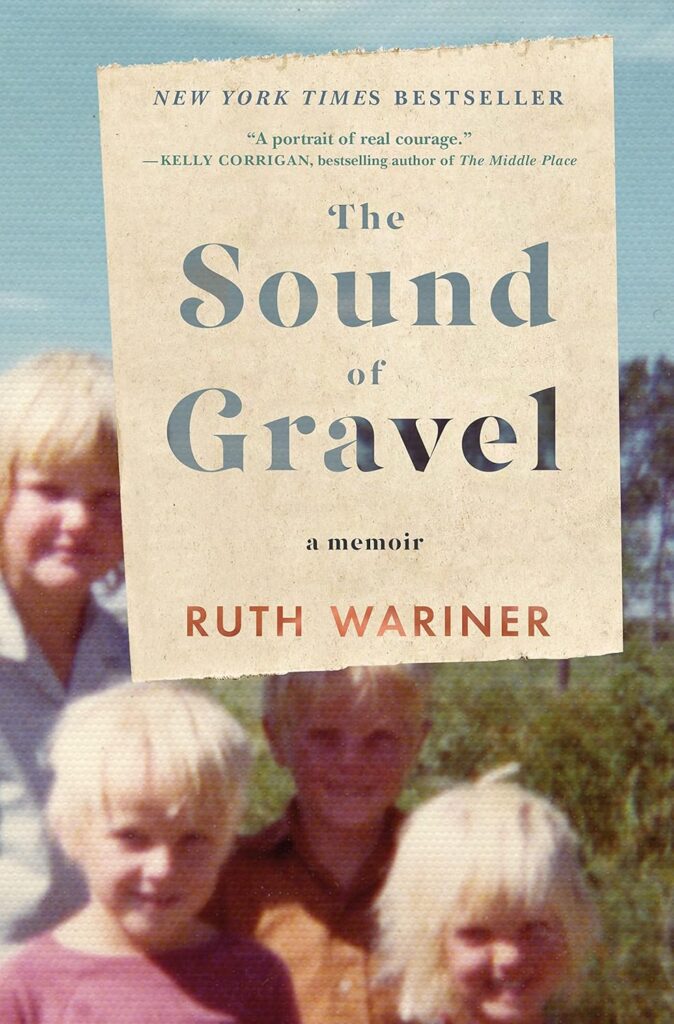
The Sound of Gravel by Ruth Warnier
Group: Church of the Firstborn (LeBaron Family)
Ruth Wariner was her mother’s 4th child and her father’s 39th.
She grew up in Colonia LeBaron, a colony in Mexico founded by her grandfather, Alma Dayer LeBaron Sr., which was mostly made up of members of the Church of the Firstborn. Her father, Joel LeBaron was murdered by his brother, Ervil LeBaron, when Wariner was young; Ervil went on to found the Church of the Lamb of God. More on him in The Polygamist’s Daughter.
There’s a great deal of family lore that Wariner recounts in order to bring the reader into the loop. As she looks back, you can tell there was a lot of effort and heartache piecing memories and family stories together in order to realize the significance of larger world and church events had on her life.
Reading the family lore and how they lived their daily lives was the most interesting part of the book to me. She does a lot of description of household duties which sometimes overstay their welcome a bit, yet also emphasize the laborious effort existing in this community required.
Wariner’s sexual abuse at the hands of her step-father was very difficult to read—due to the content, not the quality of the writing—giving readers what amounts to a fraction of understanding about the mental and physical suffering she experienced as a child. It feels as if the memoir only splashes the surface of a very deep ocean of trauma.
The Sound of Gravel might be one of the most infuriating books I’ve ever read—not because it’s bad—but because I’ve never wanted to rip through the pages of reality to scream at a person more than Wariner’s step-father and mother. No child should be asked by their mother to forgive their abuser.
The Sound of Gravel is worth reading if you want to read a memoir that will make you cry—the content is unforgettable.
Additional content warnings for child death, mental disabilities, and suicide.
The Polygamist’s Daughter by Anna LeBaron

Group: Church of the Lamb of God (LeBaron Family Relatives)
Violence overtook the early life of Anna LeBaron, as her father, Ervil LeBaron, used murder and religious doctrine to consolidate community control.
After her father was imprisoned for murder in the 1970s, he would issue revelations from prison directing his followers to carry out killings. Anna’s life was tumultuous during this time, with the sect splintering as a result of these revelations. Her home was never stable, with frequent moves between Mexico and the United States.
Obedience to her father was akin to obedience to God, and as a result her life was dominated by a spiritual fear of breaking rules. She describes yearning for his approval as a father, a prophet, and protector, yet must confront the violent reality being fed to her. When her father dies, her interpretation of God does too.
I loved the way The Polygamist’s Daughter explores the duality of her grief for her father and for the belief system he instilled in her. The memoir shows how the tangled lines of family and religious control impact the psychology of a child; when she deconstructs her relationship with one, the other falls by proxy.
Death follows the LeBarons through the memoir and creates a very depressing atmosphere for the whole of the book, which aids the novel’s main themes of finding one’s identity through extremist religious indoctrination and generational violence.
Read The Polygamist’s Daughter if you want a memoir about spritually toxic relationship dynamics through the lens of Godly revelations.
Bad Mormon by Heather Gay
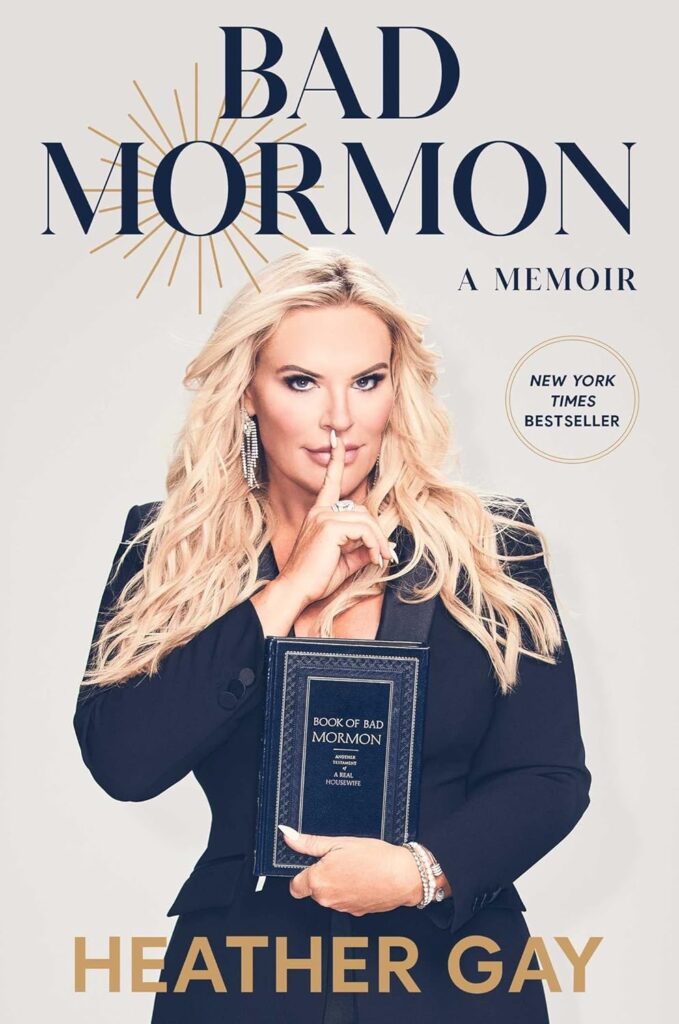
Group: The Church of Jesus Christ of Latter-Day Saints
I decided to read Bad Mormon after I saw Heather Gay’s interview with Alyssa Grenfell on YouTube. I was fascinated by the perspective of someone who was deeply entrenched with the church in a very public fashion, yet still deconstructed her faith.
Bad Mormon shares stories from Heather Gay’s childhood, growing up under purity culture and strict dating rules, through her years at BYU, going to the temple and serving a mission in France, finally into marriage, divorce, and plummeting into Real Housewives stardom.
Readers looking for more about her experience on The Real Housewives of Salt Lake City, you will have to read her second book, Good Time Girl.
Categorizing her life by the big LDS milestones—reaching the age of accountability, going through Young Women’s, attending BYU, her endowment, and serving a mission—grounds her experience in a way that is recognizable to anyone on the same path.
I enjoyed how this memoir combined traditional autobiographical storytelling with a religious social commentary. She uses her experiences as anecdotal evidence to support her larger arguments about the trauma many others experience.
One of the big themes of the memoir is the cognitive dissonance Gay felt while growing up. An early example the book uses is how the late Prophets Russell M. Nelson and Gordon B. Hinckley have entirely conflicting views on the term Mormon being used to describe church members.
Bad Mormon attempts to make space for those who feel lost along a church-ordained life path—for those experiencing the same dissonance she had.
You should read Bad Mormon if you’re looking for a religious memoir where the narrator is empowered by becoming the very thing they feared most.
Escape by Carolyn Jessop
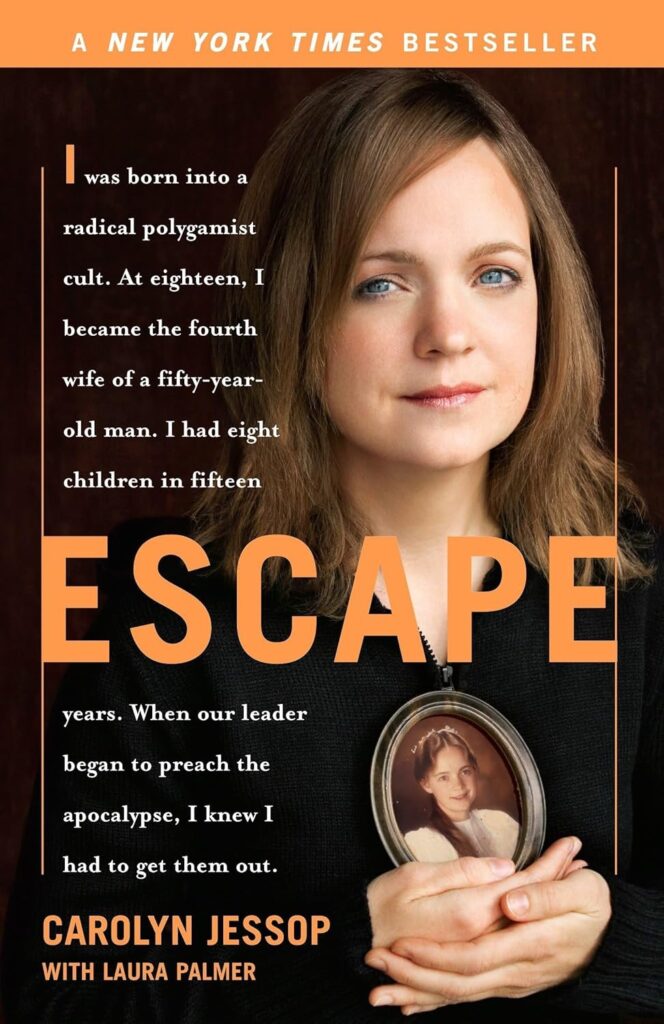
Group: Fundamentalist Church of Jesus Christ of Latter-Day Saints (FLDS)
If you’ve never heard of the Fundamentalist Church of Jesus Christ of Latter-Day Saints and Warren Jeffs, Escape is a great memoir to start with because it accounts for almost every major event the church went through from the 1970s through the 2000s.
Carolyn Jessop was raised in the FLDS to accept their doctrine of plural marriage (polygamy) and the teachings of then-prophet, Rulon Jeffs. At 18 she was placed into an arranged marriage with Merril Jessop, a part of a very prominent family. She was his 4th wife and he was more than 30 years her senior.
Escape is similar to many FLDS memoirs in that life under Rulon Jeffs is remembered as comparatively stable, until Warren Jeffs’ consolidation of power reshaped the community to one of apocalyptic fear, underage marriages, and religious abuse.
The memoir is very good at describing the ways that fear pervaded Jessop’s everyday life and controlled every action she took. It was about fear of retaliation by the other sister wives, fear for her children’s health and safety, and fear of her husband, Merril.
What makes Escape stand out is the amount of determination and planning required for Jessop to leave. The FLDS during this period was considered excruciatingly difficult to leave, not to mention she had 8 children, little money to her name, and her husband was one of the most powerful men in the community.
Escape is part survival story and part historical account of the FLDS during one of the group’s most turbulent eras. I think it’s a very accessible introduction to the culture and environment, while also offering an intimate look into the courage required to leave it all.
You should read Escape if you’re looking for a story about women navigating patriarcal systems of abuse, power struggles among sister wives, and the risks of escaping a cult.
Additional content warning for traumatic birth stories and terminal illness in children.
Lost Boy by Brent W. Jeffs
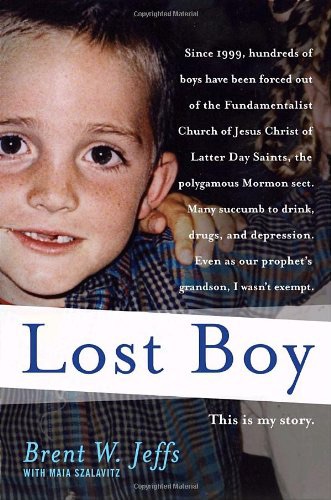
Group: FLDS
When discussing the FLDS, it’s not uncommon for people to discount the experiences of young men because the religion is so associated with patriarchal abuses of power. Yet, this ignores an entire generation under Warren Jeffs known as the lost boys, kicked out of their community to make more space for the older men to marry younger wives.
Brent W. Jeffs’s memoir, Lost Boy, attempts to rectify this error. By sharing his story, he is telling that of hundreds of other lost boys just like him.
Many layers of religious coercion take place within Brent’s narrative, but nothing more vile than Warren Jeffs utilizing religious authority to conceal his sexual abuse. Warren’s gaslighting was so severe that it caused him, and other boys, to repress memories of the trauma he inflicted.
There are many mechanisms of suppression at play, from memory and information to sexuality and teenage desires.
It wasn’t until his teen years, when Warren Jeffs had full power, that Brent decided to escape to a house with other lost boys. This is when Brent’s commentary on the institutional failures of the FLDS to prepare these boys for life really shines, showing how escape often led to drug addiction, legal trouble, and mental health issues.
Escaping did not automatically equal an easier life than what he led in the FLDS. It was only the beginning of his healing journey.
You should read Lost Boy if you want the male perspective for individuals leaving the FLDS, or if you want to learn more about what it was like for the boys Warren Jeffs pushed out of the community.
Counting the Cost by Jill Duggar
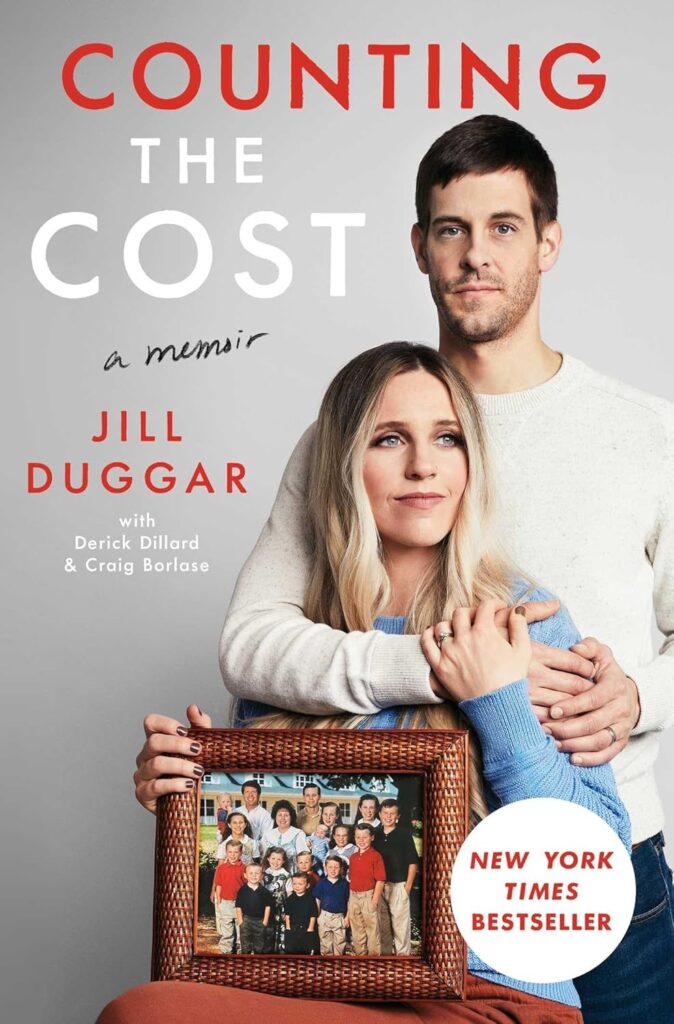
Group: Institute of Basic Life Principles (IBLP)
19 Kids and Counting was one of the TLC shows I was enthralled by as a child; the matching names, outfits, and lack of birth control pretty much mirrored every family I’d ever made in The Sims 3. I couldn’t possibly understand why my parents wouldn’t want me to see such wholesome family values on television.
Jill Duggar, the fourth child, discusses what it was like growing up in such large family, the impact of parentification, and strict control.
The Institute of Basic Life Principles, led by Bill Gothard, is the organization that the Duggars used to orient their world, through their children’s education, morals, and relationships. The book only touches on the basics of what the IBLP is all about, but that’s because the memoir’s focus is on the family.
One of the morbid fascinations people have with the Duggars is the strict rules the kids have while dating, such as saving their first kiss for marriage; because of this, the book places big emphasis on this time of Jill’s life and her transition into adulthood.
It was during this time that she started to notice the strict control her family—mostly her father—placed on her. There are many moments where she recounts being manipulated into public appearances and other situations where she was pressured to protect the family image. This, of course, leads into discussions Josh’s sexual assault and CSAM scandals.
Following her marriage to Derick Dillard, raising her own children, and her separation from the Duggar household, readers can tell how much more empowered Jill is just by the way she talks about her self-worth and agency.
One of the best parts of Counting the Cost is how Jill provides nuance to complex situations without compromising herself.
One should read Counting The Cost if they want a recap of 19 Kids and Counting and the events which follow it from Jill’s perspective.
Additional content warnings for traumatic birth stories and child death.
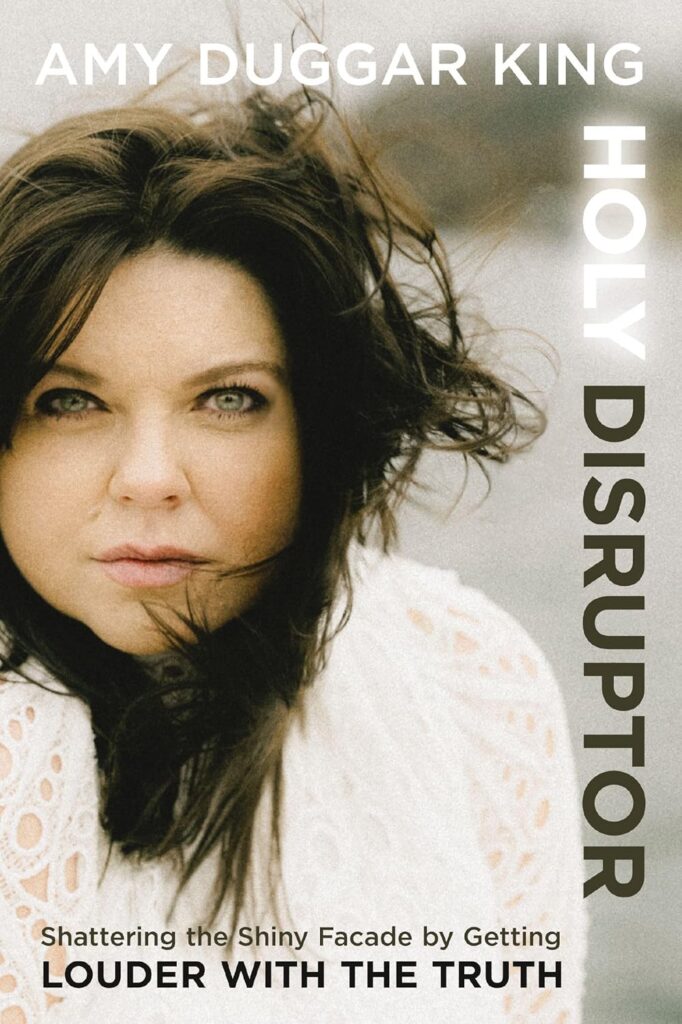
Holy Disruptor by Amy Duggar King
Group: IBLP
Amy Duggar King has joined in on the Duggar discussion with her recent memoir, Holy Disruptor. The show Shiny Happy People’s successes in 2023 (and its follow-up in 2025) has thrust King back onto people’s screens. She provides a perspective on the Duggar family and the IBLP as someone close to the situation yet still removed enough to realize it was out of the ordinary.
Holy Disruptor attempts to carve out a space for a form of Christianity removed from fundamentalist doctrine. While King herself was never in the IBLP, she is able to provide commentary through experiences with her cousins.
From a childhood perspective, I thought it made sense for her to long for a family that appeared to be happy, but of course the curtain was bound to drop with age and time on television.
Recounting her own childhood away from the public eye was one of Holy Disruptor’s strong suits because it allows readers to see what shaped her into the person who would one day be labeled ‘Crazy Cousin Amy’ on national television.
There is commentary on how a singular moment can change one’s life, that if she hadn’t laughed at the idea of an adult needing a chaperone on a date with their fiancé, she wouldn’t have been on TV.
The memoir also discussed all the scandals with Josh. There’s a point where King wishes she had been victimized in order to save her cousins from abuse, which I thought was quite poignant.
In reality, she was a pretty normal kid with a rough home life.
Pick up Holy Disruptor if you want to see the contrast in Amy’s upbringing to the rest of her cousins or if you want to see her personal reconciliation between progressive Christianity and fundamentalism.
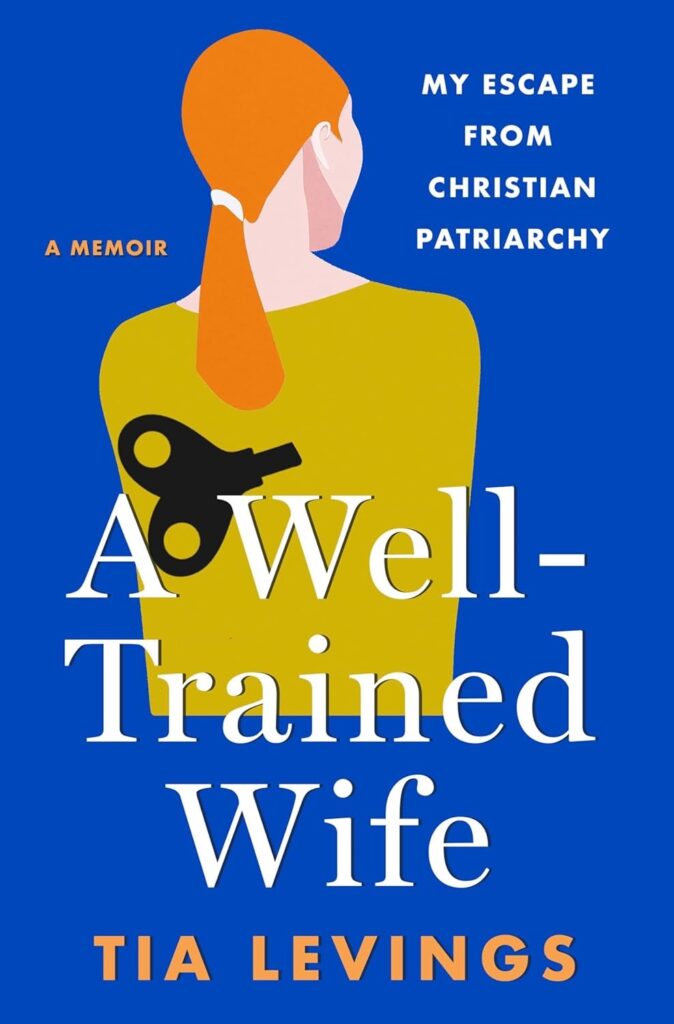
A Well-Trained Wife by Tia Levings
Group: IBLP
A Well-Trained Wife checks all the boxes I would want from a cult memoir, which is to say that it is educational, emotional, and entertaining.
I have featured a few memoirs here about the IBLP, but I think A Well-Trained Wife is the best to learn about the cult from because it covers everything from the ideology behind the Quiverfull movement, the ATI homeschool program, to less well-known, yet sill impactful additions such as the “parental guidebook” condoning abuse titled To Train Up a Child.
Every time the memoir brought up something new I found myself very impressed that it could pack in so much information without feeling bogged down.
A Well-Trained Wife is not only informative, but it is very emotional. The memoir takes you first down the path of growing up in purity culture, and then into the confines of marriage and biblical womanhood. As she is pushed deeper into the cult by her support group, we see terror take root with the cognitive dissonance created by teachings that promised safety and spiritual order.
The most compelling part of A Well-Trained Wife is reading the dissent into madness that overtakes everyone in the story. Whether that is the literal madness of Levings’ husband being a violent abuser, or the dissonant madness of someone attempting to make sense of a constructed reality—it’s magnetic.
Frankly, it reads like a horror or thriller novel at times. For that reason, its ability to draw me in with the story, while not compromising on information, is why it is my favorite on this list.
Read A Well-Trained Wife if you want to learn more about the IBLP while seeing how its teachings shape the everyday lives of its members.
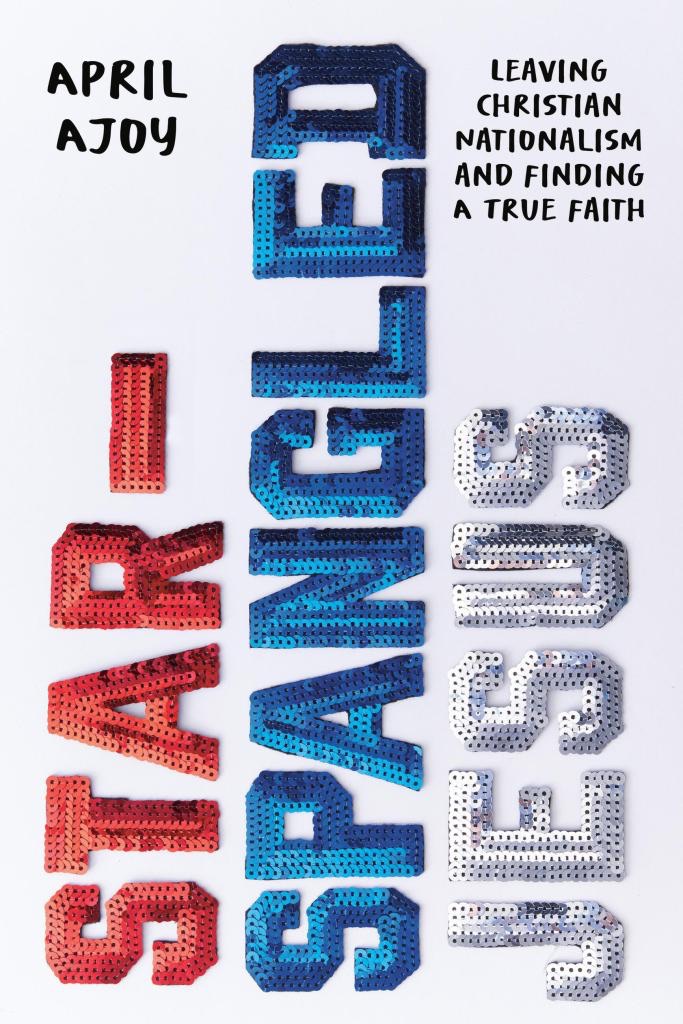
Star-Spangled Jesus by April Ajoy
Group: Christian Nationalists
In Star-Spangled Jesus, April Ajoy reflects on a life intertwined in conservative Christian nationalist ideology.
She shares various stories growing up as a pastor’s kid, such as the competitions the family held with the kids to see who could evangelize to restaurant waitstaff better…
All the stories are told in a non-linear fashion; the memoir begins in a circular manner, beginning with a glimpse into Ajoy’s future and looping back around to her ideological escape.
Following the January 6, 2021 attack on the United States Capitol, Ajoy came to understand that the people she thought were terrorists were her people—friends, church members, neighbors, etc.
At that moment, everything about her worldview began to unravel.
While Ajoy was once making her own un-sponsored campaigns for Mitt Romney, now she makes TikToks about deconstructing faith and far-right dogma.
Everything reinforces the book’s main point, that anyone is susceptible to high control groups or radical ideologies. More importantly, that they can leave to find what Ajoy describes as a “true faith.”
Deconstruction is a buzzword at the moment, as people on both sides of the debate attempt to dictate what “proper” deconstruction looks like—as if it isn’t a completely self-fulfilling process which looks different for everyone.
Ajoy is trying to bridge a gap between these sides by sharing her story.
You should read this book if you want to learn how someone can fall into radicalization or wanting to de-radicalize yourself.
Additional content warnings for homophobia and transphobia.